On this page

Conference & Event Activation
The Pre-Conference Playbook: How to Turn a Conference Into a PR and Content Machine
Most founders treat conferences as a lead generation event. The smart ones use the weeks before to build media relationships, create content, and grow their audience — inside the room and out.
There's a version of conference ROI that shows up in your CRM: leads collected, demos booked, deals started. That version matters and we all know it.
But there's another version that most early stage founders completely overlook, and it's often worth more in the long run. It's the article that runs in an industry publication after the show. The collaborative partner video that introduces your brand to an audience you didn't have to build. The AMA at your booth that generates foot traffic and teaches you which messages actually land with your buyers.
All of this gets planned before you arrive.
Conferences are one of the most concentrated media and content opportunities available to an early stage startup. For a few days, every journalist, partner, and potential collaborator in your industry is in the same building. The founders who recognize that and prepare for it walk away with assets and relationships that compound for months. The ones who don't walk away with a badge lanyard and a sore back, and a defeating sense that the conference wasn't worth their time.
Every time we run this pre-conference playbook, it pays off in dividends. So, as you evaluate the ROI of your conference spend, review our playbook for making the most of that opportunity.
Book Media Interviews Before the Show Starts
This is one of my favorite pre-conference tactics and one of the most chronically underused by early stage startups.
Every major industry conference has media partners. Publications and journalists attend specifically because they want to cover what's happening in the space. They are literally there to talk to companies like yours. And yet, most founders never reach out.
We did this for Exum Instruments ahead of a scientific conference they were exhibiting at. Before the show, we pulled the list of media partners from the conference website and sent personal outreach to each one, offering a 15-minute interview with the founder on-site, including a link to a Calendly where they could book their interview right then and there. The result was four on-site media interviews and three subsequent published articles. Exum also came away with ongoing relationships with those outlets, making it easy for them to reach out the next time they had news to share.
The outreach itself is simple. A short, direct email with a scheduling link and a one-paragraph description of what makes the company interesting right now.
Don't see a media partner list on the conference website? Email the organizers and ask if press will be in attendance. More often than not, they will be. Then, email your industry publications and ask them if they're planning to attend.
Host Your Own AMA to Drive Traffic and Test Your Messaging
Speaking slots at conferences are expensive and competitive. But there's another way to create a stage for yourself, one that costs almost nothing and can drive more qualified traffic to your booth than a sponsored session.
IndiAide, a client who attended the ASHA Conference last fall, used her existing social following and community presence to host an AMA at her booth. Before the conference, she posted about it on her own pages and in several Facebook groups where her target audience — speech language pathologists — were active members. She invited people to come by, ask her anything, and have a real conversation.
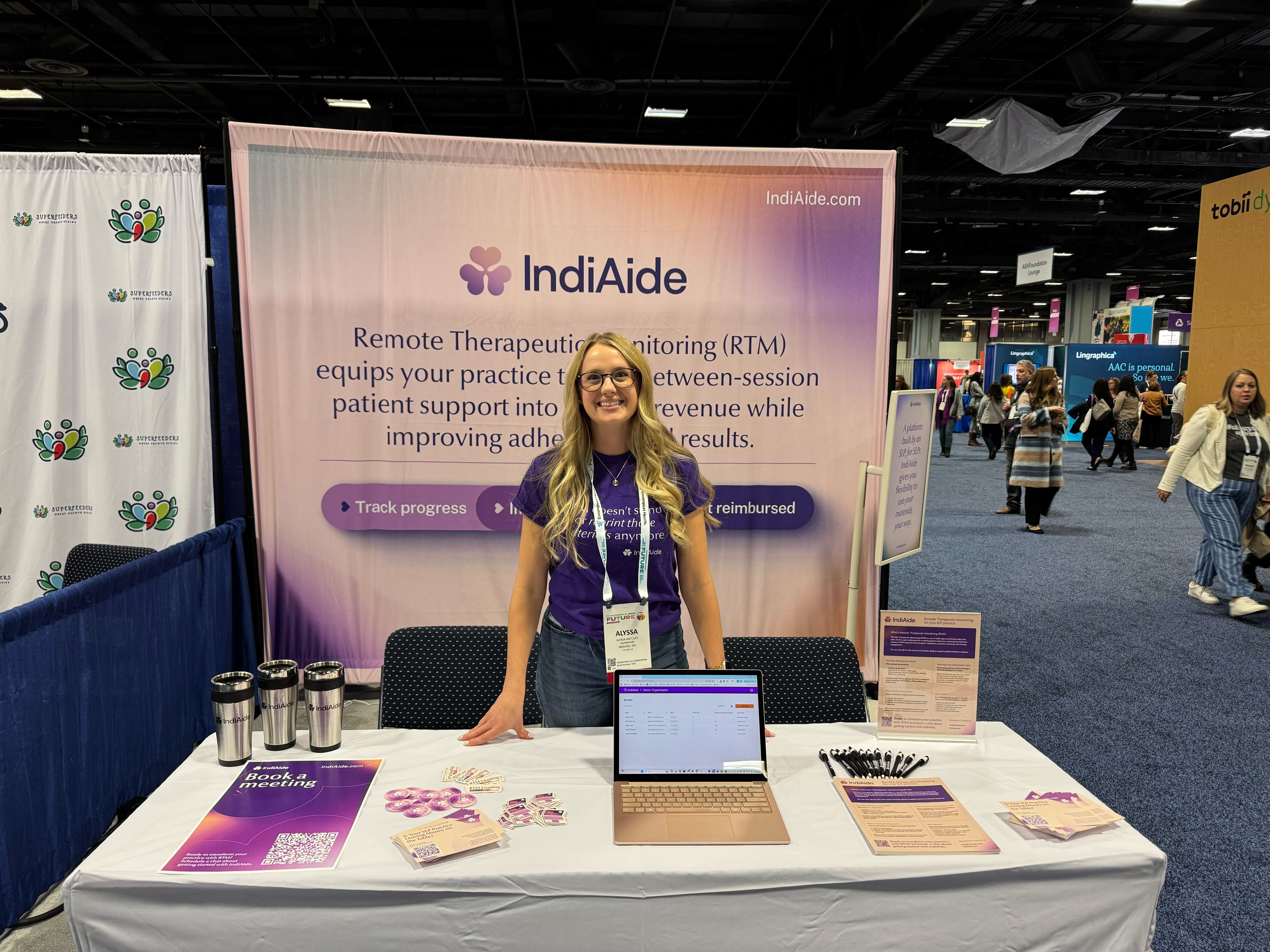
The AMA did two things at once. It generated booth traffic from people who were already warm contacts. They'd seen her post, they knew what to expect, and they came with genuine curiosity. And it gave IndiAide a real-time read on which messages landed and which ones didn't.
That second benefit is one founders consistently underestimate. When you're still pressure-testing your positioning before committing to a broad paid campaign, a live conversation with a room full of your target audience is invaluable. You learn what language your buyers use, what problems feel most urgent to them, and which parts of your pitch make them lean in. IndiAide walked away with both pipeline and clarity — and used what she learned to sharpen her messaging before scaling it.
If you have any kind of owned audience, such as a LinkedIn following, an email list, a community or group where your ICP is active, this tactic is available to you right now.
Create Content With Other Exhibitors to Borrow Their Audience
Here's one most founders don't think about: the other companies at the conference are a content opportunity.
Before the show, look at the exhibitor list and identify companies that serve a similar or adjacent customer base, such as brands whose audience overlaps with yours, even if your products don't compete. Reach out in advance and propose a short collaborative video. An interview-style conversation at their booth or yours about a shared challenge or trend in your industry.
The benefits compound in multiple directions. The other company promotes the content to their following, which introduces your brand to an audience you didn't have to build. You walk away with content that demonstrates you're engaged in the broader market ecosystem, which signals to your own customers that you're invested in bringing them value beyond your product. And you leave the conference with an asset you can distribute for weeks after the event ends. And, so does your partner!
For an early stage startup trying to build credibility quickly, borrowing audience and authority from an established brand in your space is one of the smartest and most underutilized moves available. A five-minute video recorded at a conference can do more for brand awareness than months of organic posting from a standing start.
The Pre-Conference PR and Content Checklist
Use this in the weeks before your next conference to make sure you leave with more than leads.
30 days out
- Pull the conference media partner list and send outreach to book on-site interviews with attending journalists
- Review the exhibitor list for potential content collaboration partners and send introductions
- Draft your AMA or booth event concept and identify which owned channels and communities you'll use to promote it
2–3 weeks out
- Confirm media interview times and share any background materials that help journalists prepare
- Finalize your collaborative video concept and align on format and timing with your partner exhibitor
- Post a save-the-date for your AMA or booth event on social and in relevant community groups
1 week out
- Send a reminder post about your AMA — include the booth number and a clear reason to show up
- Prepare any content capture setup you'll need on-site (phone mount, backdrop, simple audio)
- Brief your team on the PR and content goals for the show, not just the sales goals
Day of arrival
You're not just here to collect leads. You're here to build something that outlasts the show.
A conference gives you three days in a room with your entire industry. The founders who treat that as a media and content opportunity and not just a sales floor walk away with something most of their competitors don't have: a story that keeps reaching people long after the event ends.
This is step three of a six-step conference playbook we run with clients, start to finish. See the rest of the framework, and what we'd build for your next show, on our Conference & Event Activation page: fivefour.partners/conferences