On this page

Brand
The AI Brand Problem
Why every B2B startup looks the same right now — and when that stops being acceptable
Every month I speak with nearly fifteen founders. Sometimes more. After a while, you stop needing long to spot it.
It shows up in the screen share during the first call. Sometimes it's in the email signature before we've even met. The abstract geometric mark. The clean sans serif wordmark. The purple-to-blue gradient that signals innovation without saying anything at all. The stock photo of a person on a laptop that wasn't taken to tell a story — it was taken because someone needed a photo of a person on a laptop.
TJ Nieset, Five Four's lead brand designer, sees it too. Between the two of us, we've sat with dozens of early stage founders. We've built the brand that came after the AI version several times. We know what the placeholder looks like, we know what it costs, and we know exactly when it stops being acceptable.
This is the AI brand problem. And it's not really about AI.
AI didn't create this problem. Founders without brand strategy did.
Here's the uncomfortable truth: AI is a capable executor. If you give it perfect inputs, such as your founder story, the emotional territory your brand needs to own, the psychology of your buyer, the competitive landscape, and the practical constraints of how your brand will actually live in the world, it can produce something defensible.
Defensible, but looking somehow the same as every other AI brand.
The problem is that most founders don't have those inputs because they're either too early to capture them or they simply don't see the value. They know they need a logo. They don't know they need to articulate what their company should make someone feel when they see it at a trade show versus in a cold email versus inside the product itself. So they prompt AI with what they have, such as a category, a color preference, a vague sense of the vibe. AI does exactly what it's designed to do: it looks at what everyone else in the space is doing and fits you in.
"AI becomes the brand," says TJ. "When AI feeds you a brand, it has a goal to keep that AI brand attached. Everything downstream, like the imagery and the messaging, follows the same AI logic. And that logic is always working adjacently to what's already been made."
This is why AI brands look generic. Not because the technology is incapable. Because the people prompting it don't know what a brand actually needs to do — and AI can't really tell them. It doesn't know what questions to ask. It can't push back when the answer is wrong. It has no way to recognize that a founder's story contains something worth building a visual identity around, because it never thought to ask about the story.
Brand strategy isn't a brief you hand a tool. It's a discovery process. The insight emerges through the work — through human conversation, through pushback, through a designer who looks at the letter W in your company name and sees claw marks (we'll share this brand with you soon), and knows that's the thing worth pulling on.
AI can't have that moment. And it can't tell you you're missing it.
The placeholder brand has a place
None of this means an AI-generated brand is always wrong.
If you're pre-revenue, MVP stage, still figuring out if the product works, you need a name and a logo so you can stop describing "that app thing" at Sunday dinner and start sounding like a company. You need something in the top right corner of your product and in the login screen. You need enough of a visual identity to be taken seriously by the friends, family, and early believers who are your first audience.
When you have no revenue and no funding, you use what's available until you can do better. An AI-generated brand is a perfectly reasonable placeholder.
The placeholder has an expiration date
At some point, the brand that got you here starts working against you. There are two moments when founders usually feel this most acutely.
When you're selling into enterprise. The room you're walking into has gotten more expensive. Enterprise buyers are making a significant financial and political bet when they choose a startup vendor — often six figures or more. A sophisticated brand removes friction from that decision. It signals that this company is real, that it delivers, that serious people have already trusted it. It tells the buyer that if they champion this vendor internally, they won't regret it.
A placeholder brand introduces doubt. And doubt is expensive. Your product and your sales team can overcome it, but they're working twice as hard to do it, and some deals will quietly die before you ever get the chance.
When your brand is telling the wrong story — or no story at all. This one is subtler and often more damaging. It's not that the logo is ugly. It's that the brand is communicating something the founder never intended, or failing to communicate what actually matters.
Most AI-generated brands describe a category. They don't stake a claim. They signal "we are a software company in this space" rather than "we are the company that believes this, stands for this, and exists to solve this specific problem for this specific person." When your brand tells the wrong story, it attracts the wrong buyers, repels the right ones, and makes every downstream marketing effort harder than it needs to be. You spend money pushing a message that your brand is quietly undermining.
When your brand is a placeholder, as TJ puts it, you become a placeholder for shopping around.
When your brand makes people feel… nothing. People don't just buy products. They buy association. They buy what it says about them that they chose this over something else. The person who drives a BMW isn't just buying performance. They're buying what it means to drive one. Whether the direction is luxury and bougie, or safe and caring, buyers ultimately feel an emotion when using your product or experiencing its results. That feeling should be clear in the brand and sends a signal early on, before they experience the product, that tells them what it's all about.
What a sophisticated brand actually does
Jacob Allen, founder of Reportwell, an AI compliance platform for K-12 schools, understands this better than most founders at his stage.
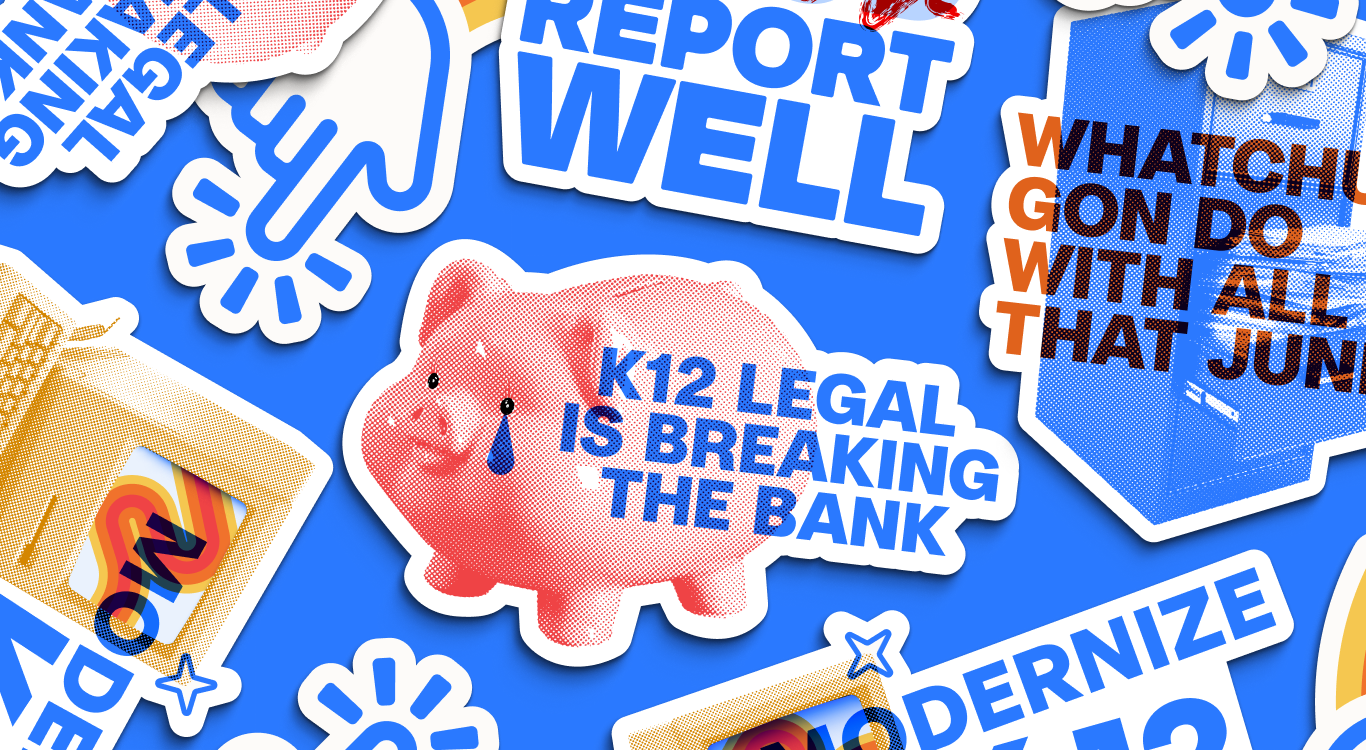
"Reportwell has invested in our brand, and I legitimately don't have enough time to tell you the testimonials we receive on how people view our brand, our style, and our tone compared to competitors in the space," Jacob says. "Too often, founders invest heavily in product and sales while underinvesting in brand, even though how a company shows up in the world can meaningfully shape growth, trust, and momentum."
Jacob came in with something most founders don't have: a genuine understanding of what he wanted his brand to do. He knew his buyer. He knew the feeling he wanted to create. He gave his designer the right inputs and the output reflected that. Reportwell doesn't look like every other EdTech startup. It looks like a company worth paying attention to.
Jacob also thinks about brand the way the best consumer companies do — as a long game. His buyers today aren't always the decision makers yet. The administrators, the district leaders, the compliance officers who will eventually sign a purchase order are forming impressions now. Think about the Ferrari ad you saw at twelve years old. You couldn't buy it. You wouldn't buy it for decades. But you wanted it from that moment. Jacob is building that kind of brand equity by showing up consistently, looking serious, earning trust from people who aren't ready to buy yet but will be.
That's a level of brand thinking that has nothing to do with AI. And everything to do with understanding what brand is actually for.
The tells, and why they matter
TJ spends a lot of time looking at brands. Here's what he sees repeatedly in AI-generated work — and why each one is a problem beyond aesthetics:
The logo that tries too hard — or not hard enough. AI logos tend to land in one of two places: overworked illustrations that feel like AI trying to prove itself, or generic mark-plus-wordmark combinations that mean nothing. What's missing in both cases is restraint with intention. A well-designed logo knows exactly how much to say and what to leave out. "I don't think AI could think that minimally sometimes," TJ says. A logo that strips itself down to a single meaningful shape — and does it on purpose — requires a level of judgment AI hasn't demonstrated.
The consistency problem no one warns you about. AI can't build a brand system. It builds assets. Every time you go back to it, it makes a small adjustment you didn't ask for. The logo shifts slightly, the spacing changes, the color drifts. There are no invisible rules holding it together because no one ever stated them. A human designer carries those rules internally. TJ knows that every piece of Proximity collateral gets a 100-pixel border because that's what holds the grid. AI doesn't know that. It can't know that. And over time, the brand degrades in ways that are hard to name but impossible to miss.
The legal problem founders don't see coming. You cannot own what you make with AI. Your AI-generated logo is not legally your logo. At the early stage this feels abstract. The moment you raise a real round, start scaling, or need to protect your brand in market, it becomes very concrete very fast.
The font problem. Font selection is one of the most consequential and underappreciated brand decisions a founder makes. AI offers free Google fonts, which look like everyone else, or expensive licensed fonts with no consideration for budget or fit. A human designer finds the font that's right for this brand at this stage with this budget, and then figures out how to use it in ways that create meaning. The way Reportwell's font reads differently at sentence case versus all caps isn't an accident. That decision was made deliberately, because a designer looked at it long enough to see what it could do.
When to act
If you're pre-revenue, building your MVP, and you need something in the corner of your app, use what's available. Get moving. The brand can come later.
But if any of these are true, later is now:
- You're walking into enterprise sales conversations and asking buyers to write significant checks
- Your marketing isn't converting the way it should and you can't figure out why
- You look at your competitors and your brand doesn't hold up in the comparison
- You're about to spend real money on marketing and you're not sure your brand can carry it
A sophisticated brand won't close deals by itself. But it will make every other thing you're doing work harder — and it will stop quietly costing you deals you never knew you lost.
That's worth more than the placeholder ever was.