
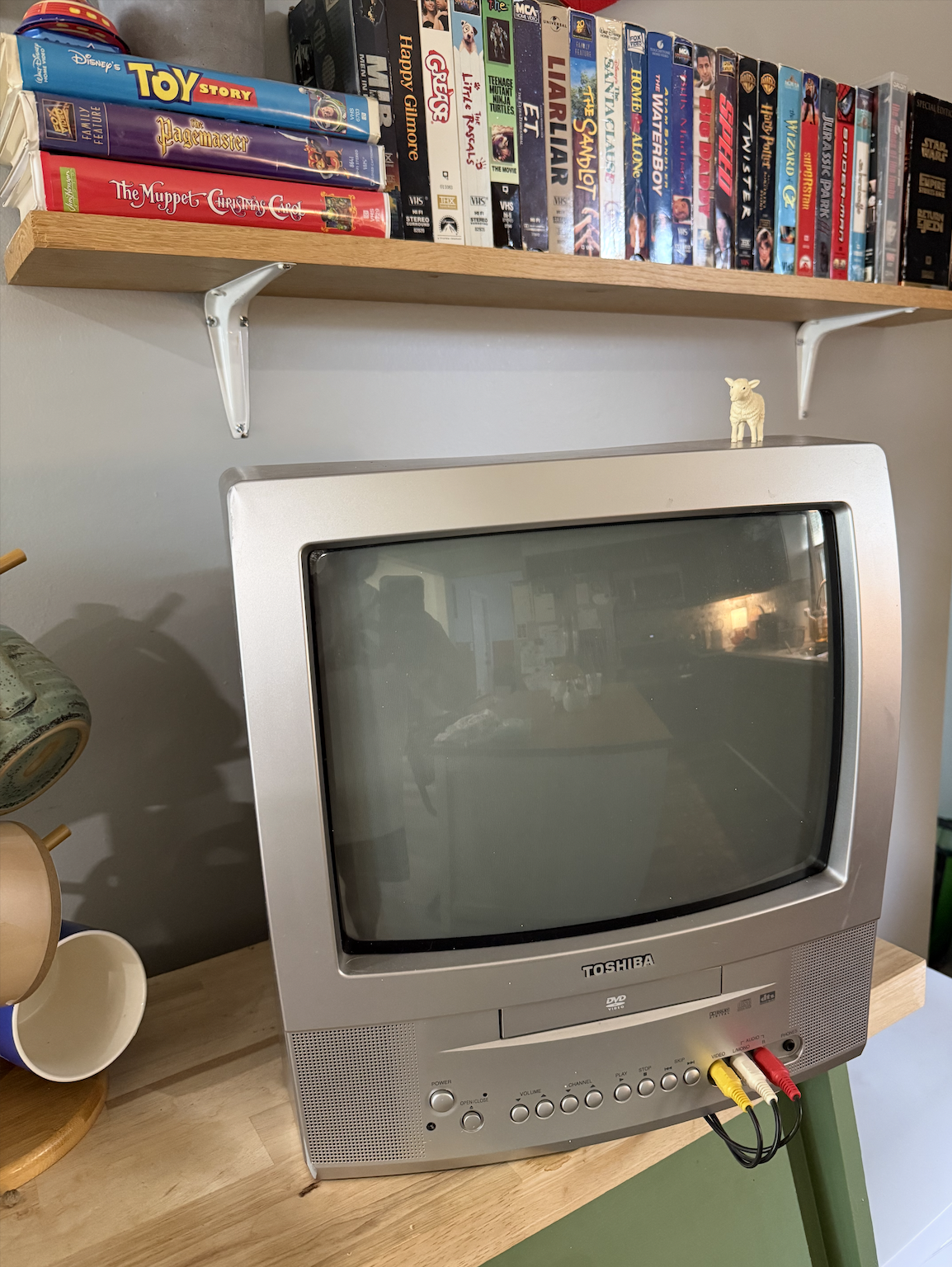
Remember that opening line from Full House? “Whatever happened to predictability? The milkman, the paperboy, the evening TV?” Full House aired in September 1987. At the time, personal computers were on the rise, VCRs dominated in-home entertainment, and pagers were still the primary form of communication for when you’re away from home.

At the time, it probably felt like life was moving rapidly. Fast forward to today and it seems like every week contains a years-worth of technological advances. Take 30 seconds to scroll your social feed and you’ll spot something new, something innovative, something you haven’t yet heard about.
When all we had was cable television, commercial interruptions were limited to a handful of 15, 30, and 60 second spots throughout the half hour programming. You caught your favorite show at the time it aired. The content was available when the channel offered it - and that was it. No 24/7 streaming, no DVR-ing. You caught it or you didn’t. Then you waited a week until the next episode came out.
At the time, these parameters felt like restrictions. When the internet brought streaming, we saw our newfound freedom and flexibility to catch the show when WE were available. DVRs allowed us to view shows we wouldn’t have seen while we’re at work such as daytime soaps and Dr. Phil episodes.
The always-on, always-available, at-your-fingertips media went from being the exception to the rule. Why wait until 6:30 pm to catch the evening news when it’s been available to you all day long on NBCNightlyNews.com?
We gave up predictability for availability.
Technology has afforded us so much, and yet it has taken away the routine aspects of everyday life that offered predictability and stability. The allure of immediate access to information and entertainment meant that we now expect immediate access. But that immediacy comes with a cost. A cost that shows up in our mental capacity to consume such constant access, and therefore constant change.
Here’s a personal example many of you can relate to: What channel is your favorite sports team aired on? I guarantee it’s not one, but at least 3 different networks. Thursday’s on Prime, Monday’s on NBC, Wednesday’s on Hulu. If you’re a fan of WNBA, better get Fubo, Sling, and YouTube TV. Oh, and don’t expect any schedule to be set in stone. Each week it can change, so the first few minutes of every game is spent searching for what channel it’s on. 50/50 chance I am not a paid subscriber. (Just head over to Insta for a laugh from this fan if you still don't get it).
Or, here’s a work example: Which LLM are you using? The one that gives our data to China? Or the one that seems dumber than a box of rocks? Did you know they moved the connections to the customize tab? Oh hey, have you tried Claude Design? It’s that tiny little button next to your name that you probably won’t see. Just don’t post the output verbatim to LinkedIn, people will mark your post as AI Slop with their new feature.
In 2026 alone, I’ve switched CRMs, proposal signing software, payment processors, and have used AI more than ever before. These were good decisions. But I underestimated the fatigue of learning so many new tools all while still delivering work and staying up on my craft.
I am, just, a little, tired, and wishing there were a few things in life more predictable.
Vinyl record sales have surpassed CD sales for the first time since 1987. Is your favorite artist streaming on Spotify or just Apple Music? Well, it doesn’t matter if you just go buy their record.
Why figure out which streaming network the game is streaming? Just go to the neighborhood pub where you know they’ll have it on.
When there are few options, it’s natural as humans to create new distribution paths. Like offering a product in multiple colors, sizes, dimensions, or price points. And it’s also natural that when multiple options are available, a new competitor comes along and offers just one. The natural evolution is to start small, then get big - but with big comes a desire to get small again.
Change is constant. Change is a good thing. Change can also be for change’s sake. When we think about developing products that solve real problems, we must ask ourselves how that solution changes the daily lives of those who use it. Is this essential? Is it incremental? Is it possibly annoying and detrimental, despite it seeming cool and innovative on the surface? (Looking at you, WNBA streaming schedule, and every streaming service that automatically plays a trailer while you scroll).
I'm simply advocating that we pay close attention to consumer behavior and consider when new features and updates actually get in the way. Consider how your consumer wants to interact with your product and think about how to make that easy for them. The more friction, the more churn, all of which could be solved by prioritizing the human experience. Maybe they aren't churning for price or selection, but rather just to be a little less annoyed.
New: EventReps conference lead-capture partnership
Read →