On this page

Conference & Event Activation
Booth Design & Messaging: The Three-Second Rule for Trade Show Booths
Most trade show booths lose the room before a single conversation starts. Here's how backdrop messaging, layout, and signage hierarchy decide whether your booth gets skipped or gets a visit.
Most B2B founders who exhibit at a trade show will spend thousands of dollars for a booth and walk away having wasted almost all of it, because they treated booth design as a formality instead of a designed environment.
Sad, right? Friends, it doesn’t have to be this way.
Events can be one of the best ways to grow awareness and build pipeline in just day or two on the exhibit floor. But when you don’t show up with your best foot forward, you lose any and all ability to generate return on your costly investment.
A crowded show floor gives you about three seconds to earn a second look. Backdrop messaging, layout, and signage hierarchy either buy you that look or lose it.
I've walked probably a hundred trade show floors in my career. On behalf of companies I worked for, as a general attendee just networking, and now on behalf of Five Four's clients. On every single one of those floors, there are exhibitors who spent real money to be there and are about to watch it disappear.
I remember a healthtech conference a few years ago where almost every booth made the same mistake. Companies were so focused on explaining their technology that they forgot the person walking by didn't care about the technical details yet. They cared about the outcome. You could stand ten feet from a booth and still have no flippin’ idea what the company did, because the backdrop and the pull-up banner were both crammed with text. The only way to find out was to start a conversation, and that conversation could burn ten or fifteen minutes of the limited time you have to walk a show floor.
No matter your industry, there's no excuse for that. So let’s talk about how to show up better.
Why you have three seconds, not three minutes
Imagine this: An attendee - your best prospect - is walking the trade show floor. Whether the floor has 30 booths or 3,000, that attendee has to skim and scan under real time pressure, trying to decide where to spend the few hours they have. And most people, if we're honest, are a little nervous about walking up and starting a cold conversation. Your booth's job is to hand them the opening line before they have to find one themselves.
That decision happens faster than most founders think. The amygdala, the part of your brain that sorts safe from hazard, friend from foe, makes that call in about a tenth of a second. Faster than conscious thought. When someone is scanning a trade show floor, that's the mechanism doing the sorting. They have no idea it's happening. The amygdala is determining if this booth is friendly aka interesting, exciting, and worth learning more about.
Think about how you choose a book in a bookstore. You're skimming spines, and something has to jump out before you know why. Maybe it’s a word or a color that spikes your interest, or where it's sitting on the shelf. You don't consciously evaluate every book on the table. Your brain filters for you, automatically, and only the ones that clear that first filter get picked up.
A trade show booth works the same way. It's not about whether your booth says the smartest thing, but whether it visually registers before anyone has read a single word.
Stop trying to explain the product
Most founders cram their backdrop full of detail: features, differentiators, a full sentence explaining exactly how the product works. It feels responsible - “If we don’t say what we do, how will people know what our product is?” But sadly the opposite effect is true. This tactic reads as a lack of confidence.
Cramming that much onto a backdrop tells attendees a founder doesn't trust them to fill in the gaps themselves. And it backfires. An overexplained booth reads as a confusing one, and confusing booths don't get approached, because people can already tell the conversation is going to take longer than they have.
A booth message has one job: spark a conversation. Stop assuming that by not being a household name, you have to describe exactly what you do all the time. Instead, describe the feeling people have when using your product. Cover the value and the outcome, not the way in which you do it.
The desk is a barrier, not a stage
We’ve all seen this booth before: The six-foot table, pushed right to the front, with the team standing behind it and prospects standing in front. It's a layout choice nobody makes on purpose, and yet it has become the de facto booth presence.
That table creates a negotiation. Prospects ask questions, your team delivers answers, and the interaction starts to feel like a this-or-that instead of a conversation. There's a reason people say "we're on the same side of the table," not "we're across the table from each other." When there's an actual table between you and the person you're trying to talk to, you're already on opposite sides of it.
In our client engagements, we dedicate time to discuss and layout where the tables, chairs, and materials sit inside a booth, specifically so the space invites people in instead of making them cross a line to talk to you. It's a small design decision that changes how many conversations you actually get to have and can make a huge difference.
Give people a reason to remember you, and tell their network
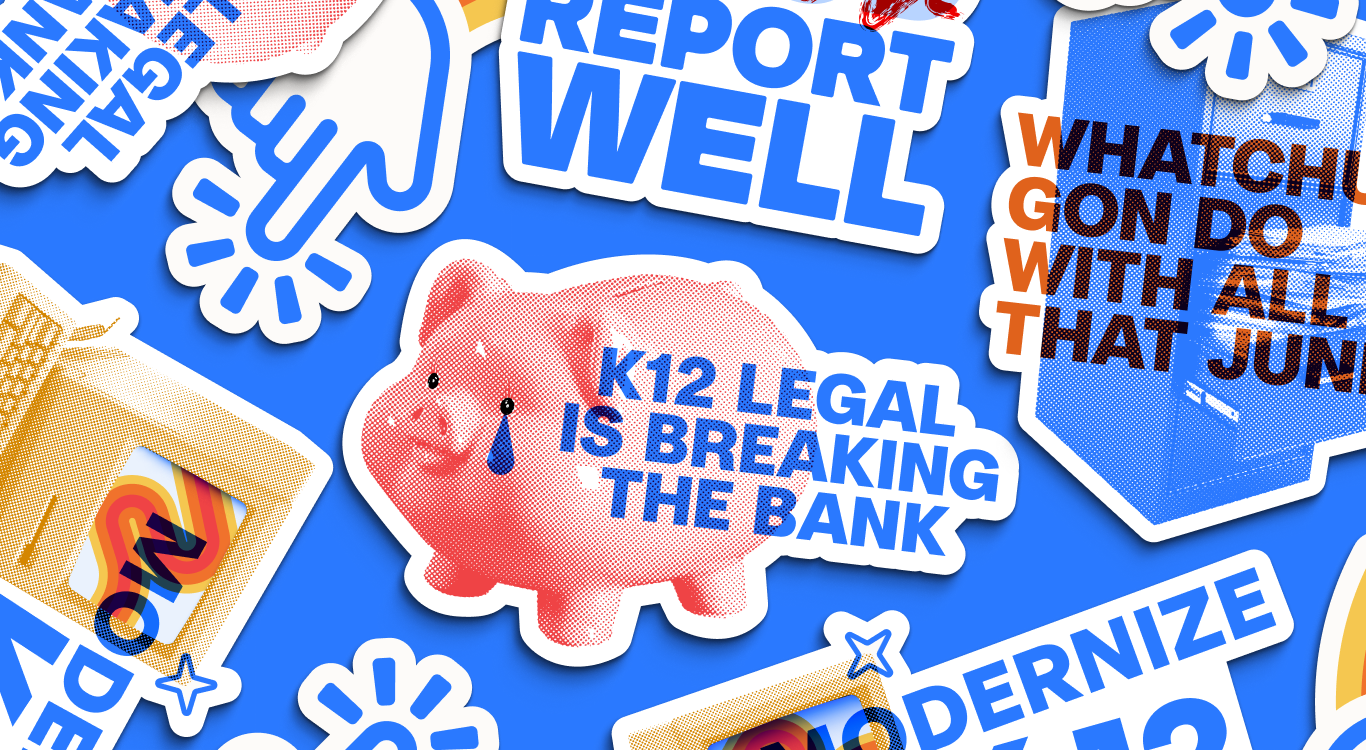
Reportwell learned this early. At one event, they put out small pink rubber flamingos on the booth table. Attendees grabbed them, and those flamingos went home to prospects' desks. Weeks later, on sales calls, prospects would point at the flamingo sitting behind them on camera and bring up the conference. That flamingo did more marketing sitting on a desk than most swag ever does.
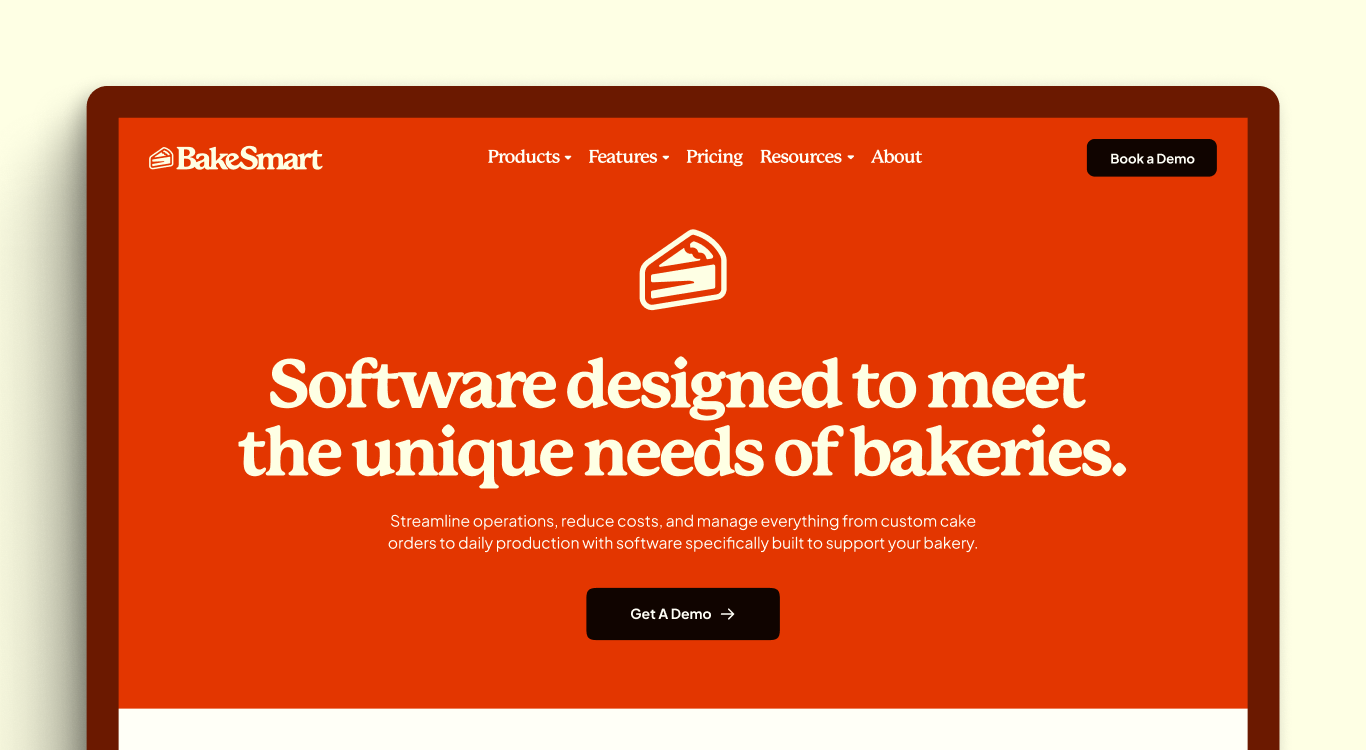
But swag isn't the only lever, and it's not always the best one. For Reportwell, we also brought a whiteboard with a question written on it, had attendees write their answer, then took their photo in front of the booth's large backdrop. For Bakesmart, the CEO brought a six-foot gold whisk he already had at home (the same one that shows up behind him on video calls) and let people take photos with it at the booth.
Those photos ended up on personal Facebook and Instagram profiles, seen by each attendee's own network. A great swag giveaway sits on someone's desk. But a great photo moment gets the prospect to do your marketing for you, unprompted, to people you'd never otherwise reach.
%20(1).png)

Building the kit, and the budget, the right way
For most early stage startups, we build the same core booth kit, in the same order, because keeping cost in check matters. Message and creative come first, always. Once that's locked, the physical kit follows: a backdrop, a pull-up banner you can reuse for the next six to nine months, a leave-behind postcard for conversations that happen away from the booth, printed sales sheets, and some kind of clear call to action, often a monitor with a QR code linking to a booking page. Swag comes last.
For growth-stage clients with more budget, the order flips slightly. We spend more time on the vision behind the booth: what action do we actually want someone to take, and how do we build an interactive moment around that, before we design the physical pieces. Typically these clients are showing up to a conference with sponsorship deals signed, presentations to give, and happy hours to brand and activate. We help with all of this.
Your booth budget isn't a one-time spend. We look at a client's events calendar before we design anything, because a well-built backdrop, banner, and sales sheet set can carry across several shows, not just one, until messaging changes or the product moves enough to need new materials. The cost of one booth build can cover the next two or three.
Booth design checklist
- Lock your one-sentence message before you design anything else. Think values over features.
- Design the 10 x 10 layout so nothing blocks the walk-up. Evaluate how your booth looks from every angle.
- Set signage hierarchy: message first, product name second, logo smallest.
- Plan a tactile or photo moment that travels home with someone.
- Build reusable pieces (banners, sales sheets) with your next 2 to 3 events in mind, not just this one.
Where this fits in the playbook
Booth design is one piece of a six-step conference playbook we run with clients, start to finish. See therest of the framework, and what we'd build for your next show, on our Conference & Event Activation page: fivefour.partners/conferences